A wheel alignment helps keep your vehicle driving straight, your steering predictable and your tires wearing as evenly as possible.
When the wheels move out of the angles specified by the vehicle manufacturer, you may notice the car pulling to one side, an off-centre steering wheel, uneven tire wear or changes in handling.
Alignment problems can develop gradually through normal suspension wear or appear suddenly after hitting a pothole, curb or road debris.
The important thing is to identify the cause early. Correcting alignment can prevent further abnormal tire wear, but it cannot restore tread that has already worn away.
For more vehicle maintenance guides, browse the MediaSubmit Auto Mobile section.
What Is Wheel Alignment?
Wheel alignment is the process of measuring and, where possible, adjusting the angles of the wheels so they match the vehicle manufacturer’s specifications.
The technician normally makes these adjustments through the steering and suspension system rather than changing the tire itself.
Correct alignment helps the tires:
- Point in the intended direction
- Contact the road correctly
- Wear more evenly
- Respond predictably to steering
- Track properly when the vehicle is moving straight
Modern alignment equipment compares the measured wheel angles with specifications for the exact vehicle.
What Are the Main Wheel Alignment Angles?
Three terms appear frequently during an alignment: camber, toe and caster.
Camber
Camber describes how much a wheel tilts inward or outward when viewed from the front of the vehicle.
If the top of the tire leans too far inward or outward, one side of the tread may wear faster than the other.
Toe
Toe describes whether the fronts of the tires point slightly toward each other or away from each other when viewed from above.
Incorrect toe can make the tires scrub against the road instead of rolling cleanly.
This can create fast or unusual tread wear.
Caster
Caster describes the angle of the steering axis when viewed from the side.
It contributes to steering stability and helps the steering wheel return toward its centred position after turning.
Not every angle can be adjusted on every vehicle. The technician follows the adjustment options and limits specified for that particular model.
What Are the Signs of Bad Wheel Alignment?
Some alignment problems can be difficult to notice at first.
Watch for these common warning signs.
Car Pulling to One Side
If your vehicle consistently moves left or right while travelling on a reasonably flat, straight road, alignment may be one possible cause.
However, pulling can also result from:
- Incorrect tire pressure
- Uneven tire wear
- Brake problems
- Worn suspension parts
- Steering problems
- Road slope
Do not assume that every vehicle pull automatically requires an alignment.
Off-Centre Steering Wheel
When the vehicle is travelling straight, the steering wheel should normally sit close to its centred position.
If you have to hold the steering wheel noticeably to the left or right while the vehicle continues straight, have the alignment inspected.
Uneven Tire Wear
Uneven tread wear is one of the most useful clues.
You might notice:
- More wear on the inside edge
- More wear on the outside edge
- Feathered tread
- One tire wearing faster than another
Alignment is not the only possible cause of uneven wear, but it should be investigated.
Changes in Steering
A vehicle that suddenly feels less stable, wanders on the road or responds differently to steering input deserves inspection.
Alignment problems can produce these symptoms, but worn steering or suspension components can feel similar.
What Causes Wheel Alignment Problems?
Alignment can move out of specification for several reasons.
Common causes include:
- Hitting a deep pothole
- Striking a curb
- Driving over road debris
- Minor collisions
- Worn steering components
- Worn suspension components
- Suspension repairs
- Steering repairs
- Frequent driving on damaged roads
A hard impact can affect alignment immediately.
In other situations, normal wear allows the suspension geometry to change gradually.
How Often Should You Get a Wheel Alignment?
There is no single mileage interval that applies to every vehicle.
A practical approach is to have the alignment checked when there are symptoms or after an event likely to affect the suspension.
Consider a wheel alignment check:
- When the vehicle pulls consistently
- When the steering wheel sits off centre
- When tire wear becomes uneven
- After a severe pothole impact
- After hitting a curb
- After a collision
- After relevant steering repairs
- After suspension work
- When installing new tires
An annual alignment inspection can also be a useful preventive check for vehicles regularly driven on rough roads.
Your vehicle manufacturer and owner’s manual should take priority if they provide specific guidance.
Should You Get a Wheel Alignment With New Tires?
Checking alignment when installing a new set of tires can be a sensible decision.
New tires do not correct an existing alignment problem.
If your old tires developed uneven wear because of incorrect alignment, the same condition can begin damaging the new tires.
An alignment inspection allows the technician to check whether the suspension geometry is within specification before the new tread accumulates significant mileage.
Wheel Alignment vs Wheel Balancing
These services are often confused, but they solve different problems.
Wheel Alignment
Alignment concerns the angles and direction of the wheels.
Possible symptoms include:
- Pulling to one side
- Off-centre steering
- Uneven tread wear
Wheel Balancing
Balancing concerns how weight is distributed around the tire and wheel assembly while it rotates.
A common symptom of poor balance is vibration at certain speeds.
Michelin explains that alignment adjusts wheel angles such as camber, caster and toe, while wheel balancing corrects uneven weight distribution within the tire and wheel assembly.
For a detailed technical explanation, see the Michelin wheel alignment and balancing guide.
A vehicle can have perfect alignment and still experience vibration because of an unbalanced wheel.
It can also have balanced wheels while the alignment remains incorrect.
Does Steering Wheel Vibration Mean You Need an Alignment?
Not necessarily.
Vibration is more commonly associated with:
- Wheel imbalance
- Tire damage
- Bent wheels
- Suspension problems
- Other mechanical faults
Alignment problems more commonly cause pulling, uneven tire wear and an off-centre steering wheel.
If your vehicle vibrates, have the cause inspected rather than assuming wheel alignment will solve it.
Can Tire Pressure Make a Car Feel Misaligned?
Yes, incorrect pressure can create similar symptoms even though it does not normally change the actual alignment angles.
For example, if one front tire is significantly underinflated, the vehicle may feel different when steering or tracking.
Incorrect pressure can also create abnormal tire wear.
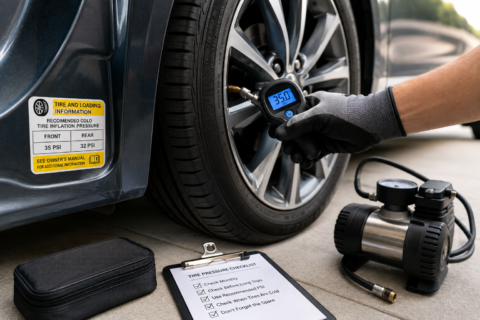
Before paying for an alignment, check that all tires are inflated according to the vehicle manufacturer’s recommended PSI.
MediaSubmit’s guide on how to check tire pressure explains how to find the correct PSI and check the tires when cold.
Can Bad Wheel Alignment Damage Tires?
Yes.
A misaligned wheel can cause part of the tire to scrub against the road instead of rolling at the intended angle.
Over time, this can wear one section of tread significantly faster.
Once tread has worn away, correcting the alignment cannot replace it.
The alignment prevents the problem from continuing, which is why identifying unusual wear early can help protect the remaining tire life.
Does Wheel Alignment Improve Fuel Economy?
Correct alignment can reduce unnecessary resistance caused by tires scrubbing against the road.
However, alignment should not be treated as a guaranteed fuel-saving service.
Fuel consumption depends on many factors, including:
- Tire pressure
- Driving speed
- Engine condition
- Vehicle load
- Road conditions
- Driving habits
The main reasons to maintain correct alignment are tire wear, predictable steering and vehicle handling.
Front End Alignment vs Four Wheel Alignment
You may hear different alignment terms at a repair shop.
Front End Alignment
A front end alignment primarily focuses on measurements and available adjustments at the front wheels.
Four Wheel Alignment
A four wheel alignment measures the relationship among all four wheels.
This is particularly relevant on vehicles where rear suspension geometry can also be measured or adjusted.
The correct alignment service depends on your vehicle’s suspension design.
How Is Wheel Alignment Done?
A professional alignment typically follows several steps.
1. Tire Inspection
The technician checks tire condition, pressure and wear patterns.
2. Steering and Suspension Check
Worn or damaged components can prevent an accurate alignment.
These parts may need repair before adjustments are made.
3. Alignment Measurement
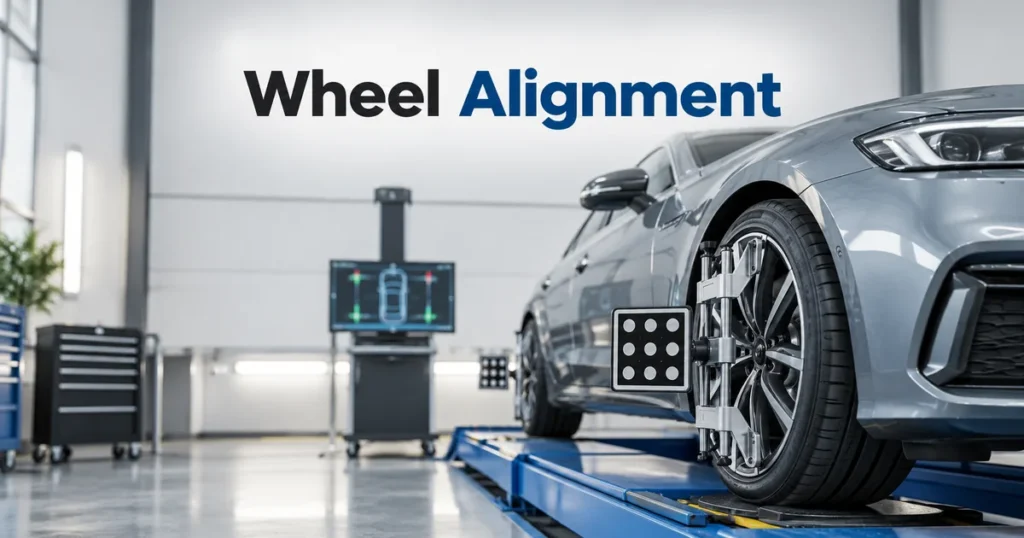
The vehicle is positioned on an alignment rack and measuring equipment is attached.
4. Specification Comparison
Current readings are compared with manufacturer specifications.
5. Adjustment
Available suspension settings are adjusted where required.
6. Final Measurement
The technician checks the readings again to confirm the vehicle is within the required range.
Can You Do Wheel Alignment at Home?
You can inspect your tires and steering behaviour yourself.
You may notice obvious uneven wear, pulling or an off-centre steering wheel.
Accurate alignment, however, requires precise measurements and vehicle-specific specifications.
Home techniques may indicate that something looks wrong, but they are not a complete replacement for professional alignment equipment.
Wheel Alignment vs Tire Rotation
Tire rotation and alignment are also different.
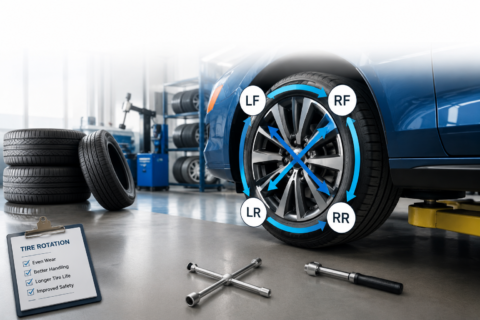
Tire rotation moves tires from one position to another to help distribute normal wear.
Wheel alignment adjusts steering and suspension angles.
Rotating the tires cannot correct incorrect alignment.
Likewise, an alignment does not replace regular tire rotation.
For recommended rotation intervals, read How Often Should You Rotate Tires?.
Common Wheel Alignment Mistakes
Ignoring Uneven Tire Wear
Continuing to drive on incorrect alignment can increase tread damage.
Investigate unusual wear before the tire becomes unusable.
Assuming Every Pull Means Bad Alignment
Pressure differences, road slope, brakes and suspension faults can also make a vehicle pull.
Confusing Alignment With Balancing
Alignment controls wheel angles.
Balancing corrects uneven rotating weight.
Installing New Tires Without Investigating Old Tire Wear
If the previous tires wore unevenly, identify the cause before allowing the same problem to affect a new set.
Expecting Tire Rotation to Fix Alignment
Moving the tires to different positions does not change suspension geometry.
Frequently Asked Questions
What is wheel alignment?
Wheel alignment is the process of measuring and adjusting wheel angles through the vehicle’s steering and suspension system so they match manufacturer specifications.
How do I know if my wheel alignment is bad?
Common signs include pulling to one side, an off-centre steering wheel, uneven tire wear and noticeable changes in steering behaviour.
How often should wheel alignment be checked?
There is no universal interval. Have it checked when symptoms appear, after major pothole or curb impacts, after relevant suspension work and when fitting new tires.
Can hitting a pothole affect wheel alignment?
Yes. A sufficiently hard pothole impact can change alignment or damage steering and suspension components.
Will a wheel alignment fix uneven tire wear?
It can prevent incorrect alignment from causing additional abnormal wear, but it cannot restore tread that has already worn away.
Is wheel alignment the same as balancing?
No. Alignment concerns wheel angles. Balancing concerns weight distribution in the rotating tire and wheel assembly.
Should I get an alignment after replacing my tires?
It can be a useful preventive check, particularly if the old tires showed abnormal wear.
Can bad alignment cause vibration?
It can affect handling, but vibration is often more closely associated with tire balance, tire damage, bent wheels or other mechanical problems.
Final Thoughts
Proper wheel alignment helps your tires meet the road correctly and keeps the vehicle steering as the manufacturer intended.
Do not wait for several symptoms to appear at once.
If your tires begin wearing unevenly, the vehicle consistently pulls to one side or the steering wheel remains off centre while driving straight, have the alignment checked.
A significant pothole impact, curb strike or suspension repair is also a good reason for an inspection.
Most importantly, remember that alignment, wheel balancing, tire pressure and tire rotation are separate parts of tire maintenance.
Diagnosing the correct problem before replacing tires or paying for a service can save money and help your tires last longer.
For more practical automotive and everyday guides, visit MediaSubmit.