Seeing the TPMS light appear on your dashboard usually means your vehicle has detected a tire pressure problem.
TPMS stands for Tire Pressure Monitoring System. The system monitors tire inflation and warns you when one or more tires become significantly underinflated.
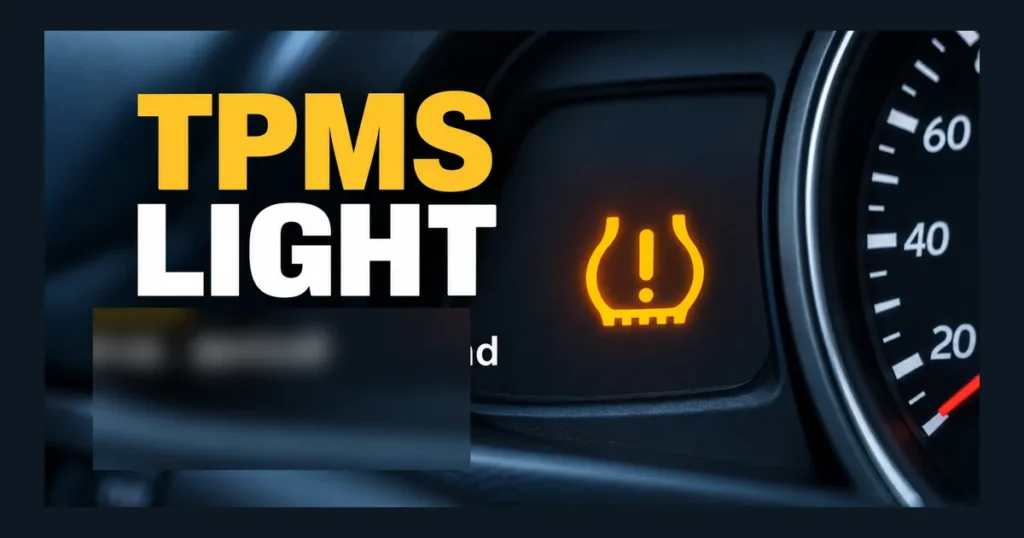
The warning symbol usually looks like a tire cross-section or horseshoe shape with an exclamation point in the center.
A solid TPMS light usually points to low tire pressure. A TPMS light that flashes for approximately 60 to 90 seconds after startup and then remains illuminated usually indicates a problem with the monitoring system itself.
For more practical vehicle maintenance guides, visit the MediaSubmit Auto Mobile section.
What Does the TPMS Light Mean?
The TPMS light is designed to warn you when tire inflation has fallen significantly below the vehicle manufacturer’s recommended pressure.
NHTSA explains that the system uses either pressure sensors or information from other vehicle sensors to monitor tire inflation and alert the driver when pressure becomes too low.
Federal TPMS requirements for applicable light vehicles are designed around detecting significant underinflation. The federal standard includes a warning threshold at 25 percent or more below the vehicle manufacturer’s recommended cold inflation pressure under specified test conditions.
That does not mean you should wait until the warning light appears before checking your tires.
Your tires can be below their ideal pressure before the TPMS warning threshold is reached.
Solid TPMS Light vs Flashing TPMS Light
Understanding how the warning behaves is one of the most useful things you can learn.
| TPMS Light Behavior | Likely Meaning | What to Do |
|---|---|---|
| Solid light | One or more tires may be significantly underinflated | Check tire pressure as soon as practical |
| Light appears on a cold morning and later goes off | Tire pressure may be close to the warning threshold | Check all tires when cold |
| Flashes for 60 to 90 seconds, then stays on | TPMS malfunction | Check tire pressure manually and have the system inspected |
| Returns repeatedly after adding air | Possible leak, incorrect pressure, sensor issue, or reset problem | Recheck pressure and investigate the cause |
NHTSA specifically states that a flashing warning followed by continuous illumination indicates that the TPMS may not be functioning properly.
Why Is My TPMS Light On?
Several problems can trigger a TPMS warning.
1. Low Tire Pressure
This is the most common reason.
A tire naturally loses some air over time. A slow leak, puncture, temperature change, or damaged valve can cause pressure to fall further.
When pressure drops enough, the TPMS warning appears.
2. Cold Weather
Temperature affects tire pressure.
On a cold morning, tire pressure can drop enough to trigger the warning, especially if the tires were already near the TPMS threshold.
NHTSA explains that a TPMS light may appear temporarily in cold conditions and switch off after the tires warm. However, that still means you should check the tire pressure rather than simply assuming the warning is harmless.
3. A Slow Leak or Puncture
If you add air and the same tire becomes low again, something may be allowing air to escape.
Possible causes include:
- A nail or screw
- Valve stem leakage
- Wheel damage
- Tire damage
- A poor seal between the tire and wheel
Repeatedly adding air is not a permanent repair.
4. TPMS Sensor Problem
Many vehicles use pressure sensors installed inside the wheel.
A sensor can eventually fail, become damaged, or stop communicating correctly with the vehicle.
If the TPMS light flashes for around one minute when you start the vehicle and then remains on, the monitoring system itself may have a fault.
5. Recent Tire or Wheel Service
A TPMS warning can sometimes appear after:
- Tire replacement
- Tire rotation
- Wheel replacement
- Sensor replacement
- Seasonal wheel changes
Some vehicles need a TPMS relearn or calibration procedure after certain tire or wheel services.
The correct procedure depends on your vehicle.
What Should You Do When the TPMS Light Comes On?
Do not immediately search for a reset button.
First determine whether the tires actually need air.
Step 1: Look at the Tires
If a tire appears extremely low, damaged, bulged, or nearly flat, avoid treating it as a simple dashboard warning.
If the vehicle also feels unstable, pulls strongly, or behaves abnormally, stop somewhere safe and inspect the tire before continuing.
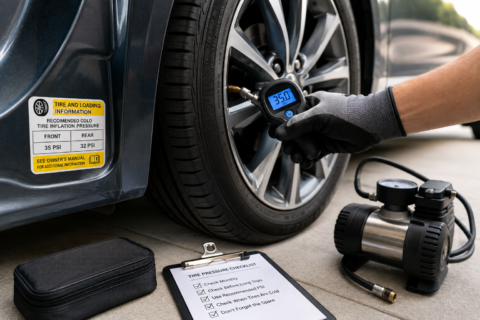
Step 2: Check Tire Pressure With a Gauge
Use an accurate tire pressure gauge.
For the most useful reading, check the tires when they are cold.
Compare each tire with the pressure recommended by the vehicle manufacturer.
You can follow MediaSubmit’s detailed guide on how to check tire pressure correctly if you need the complete process.
Step 3: Find the Correct PSI
Look for the Tire and Loading Information label, usually on the driver’s door jamb or door frame.
Your owner’s manual can also provide the correct pressure information.
Do not automatically inflate your tires to the pressure printed on the tire sidewall.
That number is not necessarily your vehicle’s recommended everyday operating pressure.
Step 4: Adjust the Pressure
If a tire is low, add air gradually until it reaches the vehicle manufacturer’s recommended cold pressure.
Check the reading again after adding air.
If the tire is significantly overinflated while cold, adjust it according to your vehicle manufacturer’s instructions.
Step 5: Watch the TPMS Light
After correcting the pressure, some systems clear the warning automatically after the vehicle is driven.
Others require calibration, relearning, or a vehicle-specific reset process.
Do not follow a random universal reset sequence from the internet.
Check your owner’s manual because TPMS procedures vary between manufacturers and models.
Why Is the TPMS Light Still On After Filling the Tires?
If all tires are correctly inflated but the warning remains, several explanations are possible.
The system may need time or driving to recognize the corrected pressure.
Your vehicle may require a TPMS recalibration.
A tire may still have a slow leak.
A TPMS sensor may have failed.
The pressure may have been checked while the tires were warm rather than cold.
The pressure may also have been adjusted to the wrong specification.
If the light continues after the pressures are confirmed correctly and you have followed your vehicle’s recommended procedure, the system may need professional inspection.
What Does a Flashing TPMS Light Mean?
A flashing TPMS light is different from an ordinary low-pressure warning.
Federal requirements include a malfunction warning for TPMS-equipped vehicles. A combined TPMS warning lamp may flash for approximately 60 to 90 seconds and then remain continuously illuminated when the system detects a malfunction.
Possible causes can include:
- Failed pressure sensor
- Sensor communication problem
- Sensor damaged during tire service
- Incorrect or incompatible wheel or sensor
- System calibration issue
When the TPMS has a malfunction, it may not reliably warn you about low tire pressure.
Check all tires manually with a gauge until the system is repaired.
Can You Drive With the TPMS Light On?
Do not treat the TPMS light as something to ignore.
If the warning is solid, check the tires as soon as practical.
A severely underinflated tire can generate excess heat, affect vehicle handling, wear abnormally, and increase the risk of tire failure.
If a tire is visibly very low, damaged, or the vehicle feels unsafe, do not simply continue driving to see whether the warning disappears.
If all tires are confirmed at the correct pressure but the light is flashing because of a sensor malfunction, the tires themselves may still be properly inflated. However, you have temporarily lost an important warning system, so the malfunction should be repaired.
Why Does the TPMS Light Come On When It Gets Cold?
Cold air can reduce tire pressure.
If your tires are already slightly low, an overnight temperature drop may push one tire below the TPMS warning threshold.
As you drive and the tire warms, the pressure can rise and the light may switch off.
That does not mean the tire suddenly repaired itself.
NHTSA recommends checking the pressure when this happens because correctly inflated tires should not repeatedly trigger the warning simply because temperatures change.
Does TPMS Replace Manual Tire Pressure Checks?
No.
This is one of the most important points about the system.
NHTSA states that TPMS is not intended to replace regular tire maintenance and recommends checking tires monthly with an accurate pressure gauge.
TPMS is primarily a warning system.
It may not alert you when a tire is only moderately below its ideal pressure.
A simple monthly pressure check can detect problems before they become large enough to trigger the dashboard light.
Direct vs Indirect TPMS
There are two basic types of systems.
Direct TPMS
Direct systems use pressure sensors associated with the wheels to measure tire pressure and transmit information to the vehicle.
Some modern vehicles display the actual PSI for each tire.
Indirect TPMS
Indirect systems do not necessarily measure tire pressure directly.
They can use wheel-speed and other vehicle sensor information to detect differences that may indicate underinflation.
Both systems are designed to warn the driver, but their reset, calibration, and repair procedures can differ.
Do All Cars Have TPMS?
In the United States, NHTSA says all passenger cars, light trucks, and vans from model year 2008 or newer are required to have TPMS. Some 2006 and 2007 vehicles also have the system.
Older vehicles may not have factory-installed TPMS.
How to Prevent the TPMS Light From Coming Back
You cannot prevent every sensor failure or puncture, but regular tire care reduces unnecessary warnings.
Make a habit of:
- Checking pressure monthly
- Checking before long trips
- Using the vehicle’s recommended PSI
- Inspecting tires for damage
- Investigating repeated pressure loss
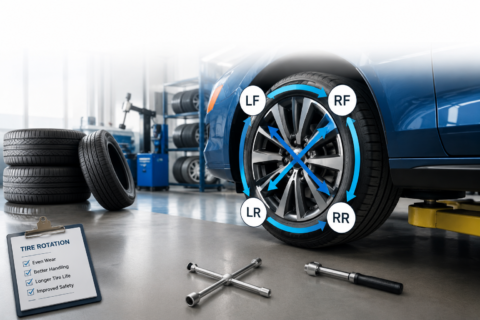
- Maintaining proper tire rotation
- Following the vehicle’s TPMS service instructions
Correct tire maintenance also helps improve tread wear and gives you a better chance of identifying a slow leak early.
For official tire safety information, see the NHTSA TireWise tire safety guide.
Frequently Asked Questions About the TPMS Light
What does TPMS stand for?
TPMS stands for Tire Pressure Monitoring System.
What does a solid TPMS light mean?
A solid TPMS warning generally means one or more tires are significantly underinflated. Check all tire pressures with a gauge.
What does a flashing TPMS light mean?
If the light flashes for approximately 60 to 90 seconds and then remains illuminated, the system has detected a TPMS malfunction.
Why did my TPMS light come on overnight?
Cold temperatures can lower tire pressure enough to trigger the warning, particularly when the tires were already close to the threshold.
Will the TPMS light turn off after adding air?
It often will after the tires are correctly inflated and the system updates. Some vehicles require driving, recalibration, or a model-specific reset procedure.
Can the TPMS light mean a flat tire?
It can indicate significant pressure loss, but the TPMS light alone does not tell you exactly why the pressure is low. Inspect the tire and measure its pressure.
Can a bad TPMS sensor cause the light?
Yes. A malfunctioning sensor or system can cause the warning to flash and then remain illuminated.
Should I reset TPMS before checking tire pressure?
No. Check and correct the actual tire pressure first. Resetting the system without addressing low pressure can hide the real problem.
Conclusion
The TPMS light is your vehicle’s warning that something needs attention.
A solid light usually means one or more tires are significantly underinflated. A light that flashes for approximately 60 to 90 seconds and then remains on points to a TPMS malfunction.
Start by checking every tire with a pressure gauge and comparing the results with the manufacturer’s recommended cold PSI.
Do not use the tire sidewall pressure as your normal target, do not assume cold weather makes the warning safe to ignore, and do not reset the system before checking the tires.
Most importantly, remember that TPMS supports regular tire maintenance. It does not replace it.
For more practical automotive and everyday guides, visit MediaSubmit.