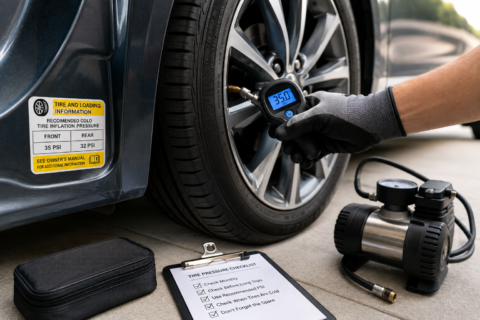
Tire rotation is easy to overlook because your car can continue driving normally even when the tires are wearing unevenly. The problem is that by the time uneven wear becomes obvious, some of the useful tread life may already be gone.
So, how often should you rotate tires?
For many passenger vehicles, a useful general guideline is every 5,000 to 8,000 miles, often around every six months. However, there is no single interval that applies to every vehicle. Your owner’s manual should always take priority because drivetrain, tire design, wheel sizes, and driving conditions can change the correct schedule. Major tire and vehicle manufacturers publish recommendations within this general range while emphasizing vehicle specific guidance.
For more straightforward vehicle maintenance guides, visit the MediaSubmit Auto Mobile category.
Quick Answer: How Often Should You Rotate Your Tires?
For most everyday drivers, start with this rule:
Rotate your tires approximately every 5,000 to 8,000 miles, unless your vehicle manufacturer specifies a different interval.
Bridgestone gives a general range of 5,000 to 8,000 miles or about six months, while Michelin recommends rotation every 6,000 to 8,000 miles as part of routine tire care. Toyota also gives a general 5,000 to 8,000 mile recommendation.
Your owner’s manual is the final authority for your specific vehicle.
Why Do Tires Need to Be Rotated?
Your four tires do not necessarily wear at the same rate.
Different wheel positions handle different forces from steering, acceleration, braking, vehicle weight, and drivetrain power. On many front wheel drive vehicles, for example, the front tires perform steering while also handling a large share of braking and driving forces. This can make them wear differently from the rear tires.
Rotation moves tires to different positions so wear can be distributed more evenly.
More even tread wear can help you get better use from the complete set of tires while maintaining more consistent traction and handling. Tire manufacturers may also require regular rotations as part of certain treadwear warranty conditions.
Tire Rotation Schedule at a Glance
| Situation | Useful Starting Point |
|---|---|
| Typical passenger car | About 5,000 to 8,000 miles |
| Normal six month maintenance | Often a convenient time to check |
| Heavy loads or towing | Inspect more frequently |
| Frequent rough road driving | Consider earlier inspection |
| Performance driving | May require shorter intervals |
| EV | Check manufacturer schedule carefully |
| AWD or 4WD | Follow manufacturer requirements closely |
| Uneven tread wear | Inspect before the normal interval |
These are starting points, not replacements for your owner’s manual. Bridgestone notes that driving style, vehicle type, hauling, off road use, and performance demands can justify shorter intervals.
Should You Rotate Tires Every 5,000 Miles?
For many vehicles, yes.
A 5,000 mile schedule is easy to remember and falls within recommendations published by several major automotive sources. Bridgestone says drivers should follow the vehicle manufacturer’s recommendation or rotate around every 5,000 miles, while Consumer Reports gives a typical range of 5,000 to 7,500 miles.
But do not assume 5,000 miles is mandatory for every car.
Some manufacturers specify longer intervals. Ford, for example, tells owners to rotate tires at maintenance visits or according to the owner’s manual rather than presenting one universal mileage requirement.
What About AWD and 4WD Vehicles?
All wheel drive does not eliminate the need for tire rotation.
In fact, keeping tread wear reasonably consistent among all four tires can be particularly important on AWD systems. Bridgestone notes that evenly worn tires can reduce stress on AWD drivetrain components.
You may see online recommendations claiming that every AWD vehicle must rotate its tires every 3,000 to 5,000 miles. That should not be treated as a universal rule.
The safer approach is to follow the schedule provided by your vehicle manufacturer and inspect tread wear regularly.
Do Electric Vehicle Tires Need More Frequent Rotation?
Electric vehicles deserve particular attention because some EVs place different demands on tires due to vehicle weight, torque delivery, drivetrain configuration, and regenerative braking.
That does not mean every EV requires the same shortened rotation interval.
For example, Ford currently lists a 10,000 mile or 12 month rotation interval in its general electric vehicle care guidance, while Michelin gives broader EV related guidance around 6,000 to 8,000 miles. This difference shows why the owner’s manual matters more than a generic internet rule.
When Should You Rotate Tires Earlier?
Do not wait for your mileage reminder if the tires are showing abnormal wear.
Have the tires inspected if you notice noticeably different tread wear between positions, unusual vibration, changing road noise, or wear concentrated on one part of a tire. Uneven wear can also point to problems beyond rotation, including inflation, alignment, suspension, or other mechanical issues.
Rotation distributes normal wear. It does not repair an alignment problem or make damaged tread safe again.
Are All Tires Rotated the Same Way?
No.
The correct pattern depends on your drivetrain, whether the tires are directional, whether all four tires are the same size, and whether a full size spare is included.
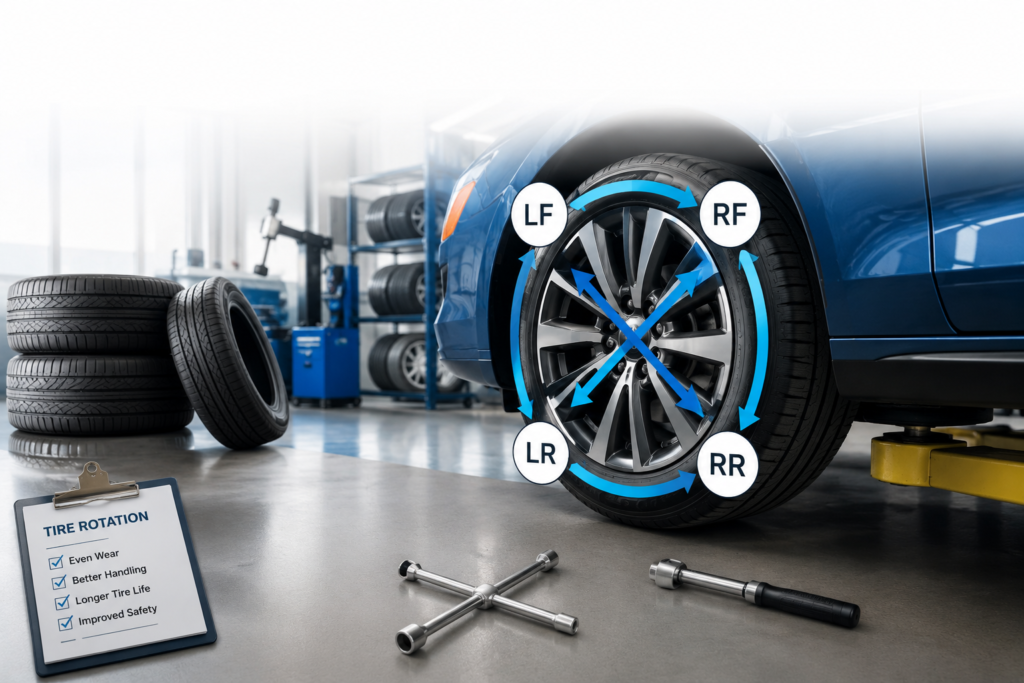
For example, common front wheel drive vehicles with equal size, non directional tires may use a forward cross pattern. Rear wheel drive vehicles may use a rearward cross pattern. Some AWD setups use an X pattern. Directional tires generally remain on the same side when moved front to rear.
If your vehicle has different size tires at the front and rear, often called a staggered setup, normal front to rear rotation may not be possible.
Never choose a rotation pattern simply from a generic diagram when your owner’s manual provides specific instructions.
Can You Rotate Tires Too Often?
Rotating slightly earlier than scheduled is generally different from neglecting rotation, but doing it unnecessarily provides little benefit.
The practical goal is consistent wear according to the manufacturer’s maintenance schedule, not rotating as frequently as possible.
Keeping a maintenance record is more useful. Write down the mileage each time the tires are rotated so you know when the next service is due.
You can also combine tire rotation with routine tire pressure and tread inspections. Michelin recommends checking tire pressure regularly along with rotation and other routine tire care. For detailed manufacturer guidance, see the Michelin USA tire rotation guide.
What Happens If You Never Rotate Your Tires?
Skipping rotation can allow one or more tires to wear significantly faster than the others.
The result may be shorter usable tire life and less consistent handling or traction. Regular rotation helps distribute wear across the set instead of repeatedly placing the greatest demands on the same tire positions.
However, rotation is only one part of tire maintenance. Correct inflation, alignment, tread inspection, and replacing damaged or worn tires remain important.
MediaSubmit also covers broader engine and equipment maintenance topics in its guide to Kohler engines and maintenance.
Frequently Asked Questions
Is tire rotation every 5,000 miles necessary?
For many vehicles, 5,000 miles is a reasonable interval, but it is not universal. Check your owner’s manual for the manufacturer’s specified schedule.
How often should you rotate tires if you do not drive much?
Mileage is not the only consideration. Some tire guidance also uses time, commonly around six months. Your manufacturer’s maintenance schedule should determine the appropriate interval.
Can I rotate tires every 10,000 miles?
Some vehicles may specify intervals around that distance, while many common recommendations are shorter. Ford’s EV guidance, for example, lists 10,000 miles for electric vehicle tire rotation. Follow the schedule for your exact vehicle rather than assuming 10,000 miles works for every car.
Should tires be rotated when you change the oil?
It can be convenient if your oil change interval and tire rotation schedule are similar. Bridgestone notes that a 5,000 mile rotation may coincide with an oil change for many drivers.
Do directional tires need rotation?
They can often be rotated front to rear while remaining on the same side of the vehicle. Follow the tire and vehicle manufacturer’s instructions because the permitted pattern depends on the setup.
Conclusion
For most drivers wondering how often should you rotate tires, 5,000 to 8,000 miles is a useful general starting range.
But the best interval is the one specified for your vehicle.
Check the owner’s manual, follow any tire manufacturer requirements, and inspect the tires sooner if you see unusual wear. Pay extra attention if you drive an EV, AWD vehicle, tow heavy loads, drive on rough roads, or use specialized tires.
A simple rotation schedule can help the tires wear more evenly and make it easier to spot developing tire problems before they become expensive.
You can find more practical automotive and everyday guides on MediaSubmit.