A permanent marker streak on plastic looks like a lost cause. The label literally says permanent, the surface is smooth and shiny, and the ink just sits there daring you to try. Take a breath, because this is one of the easier household stains to beat. On most hard plastic the ink never actually soaks in. It dries on top of the surface, which means the right product will lift it off in seconds.
The catch is that plastic is not one single material. A glossy storage bin, a childs toy, a food container, and a soft vinyl case all behave differently, and the wrong solvent can cloud or even melt some of them. This guide covers how to remove permanent marker from plastic the safe way, starting with the gentlest method and working up, with clear warnings about what to keep away from which type of plastic.
Why Marker Lifts Off Some Plastics Easily and Not Others
Hard, glossy, non-porous plastic, the kind used for storage bins, most toys, and appliance housings, holds ink right on the surface. There is nowhere for it to sink into, so a solvent can float it off with almost no effort. Soft, matte, or textured plastic is a different story. Vinyl, silicone, frosted containers, and some 3D printed pieces have tiny surface texture that grabs the ink and holds on, so those take more patience.
There is one piece of good news that sets plastic apart from wood or fabric: on true non-porous plastic, age matters far less. A mark that has been there for months often comes off almost as easily as a fresh one, because it never penetrated in the first place.
Identify Your Plastic First
Before you reach for anything, work out which kind of plastic you have. It takes five seconds and it decides both which method to use and which products to avoid.
The quick gloss-and-feel check
Run a fingernail lightly across a clean part of the surface. If it feels smooth and slick and looks glossy, the plastic is non-porous and the ink is almost certainly sitting on top, ready to lift. If it feels slightly grippy, soft, rubbery, or matte, it will hold ink in its texture and need more work.
Watch out for clear and rigid plastic
See-through rigid plastics, such as acrylic and polystyrene, scratch and cloud very easily. Treat these with extra care, keep abrasives away from them, and never use acetone or nail polish remover, which can literally melt or permanently fog the surface. More on that in the spot-test below.
Always Spot-Test First (Plastic Can Cloud or Melt)
This is the step that separates a clean fix from a ruined toy or a hazy container. Some solvents that are perfectly safe on one plastic will etch, soften, or fog another. Thirty seconds of testing saves you from a permanent mistake.
- Pick a hidden spot: the base of the container, the underside of the toy, or an inside edge.
- Apply a small amount of whatever you plan to use to a cotton swab.
- Rub gently for about ten seconds, then wipe it off.
- Wait a minute and look closely. If the plastic has gone cloudy, soft, sticky, or dull, stop immediately and switch to a gentler method.
How to Remove Permanent Marker From Plastic: Gentle to Strong
Work down this list in order and stop the moment the ink is gone. There is no reward for starting with the harshest solvent, and plenty of scratched bins and clouded toys come from doing exactly that.
Method 1: Dry erase marker
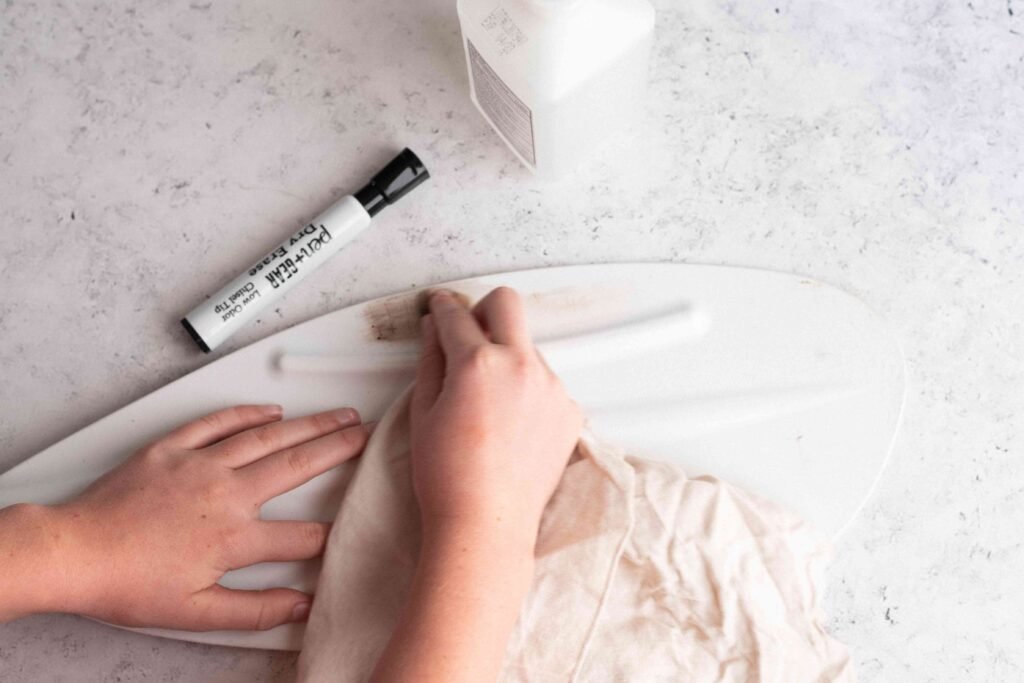
This is the one that looks like a magic trick. Scribble a dry erase marker directly over the permanent mark, covering it fully, then wipe immediately with a dry cloth while it is still wet. Dry erase ink contains a solvent that reactivates the permanent ink, and the two lift away together. It works best on hard, glossy plastic and is the gentlest option, which is why it goes first. The same trick works on whiteboards, most metal, and sealed wood too, so if you ever face ink on a table, our guide on removing permanent marker from wood walks through it in detail.
Method 2: Rubbing alcohol or hand sanitizer
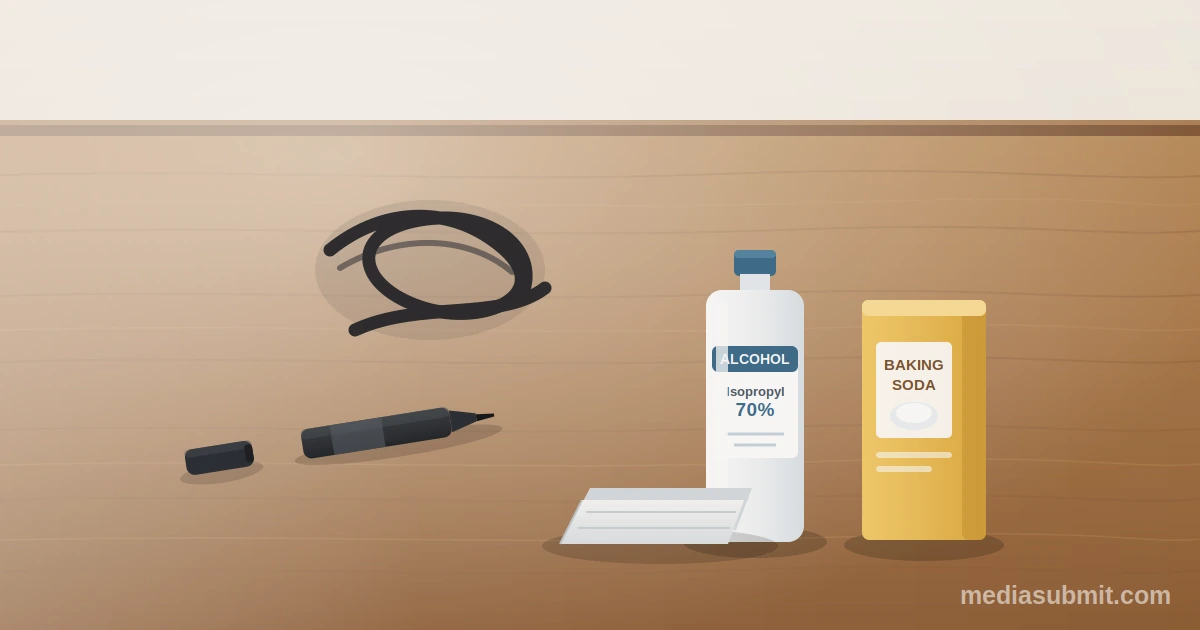
This is the reliable everyday fix. Dampen a cotton ball or cloth with isopropyl rubbing alcohol, or use alcohol-based hand sanitizer if that is what you have, and rub the mark. The alcohol dissolves the resin that binds the ink, and it lifts cleanly off non-porous plastic. Turn to a fresh part of the cloth as ink transfers, and repeat until the surface is clear. Alcohol evaporates fast and is safe on almost every hard plastic, which makes it the best all-rounder here.
Method 3: Toothpaste and baking soda
For plastic with a little texture, a mild abrasive works where a pure solvent slips off. Mix equal parts non-gel white toothpaste and baking soda into a paste, rub it over the mark with a soft cloth in small circles, then wipe clean and rinse. It gently lifts ink sitting in surface texture without the harshness of a strong solvent. Skip gel toothpaste, which has no abrasive and just smears.
Method 4: Melamine foam sponge (magic eraser)
A melamine sponge is a very fine abrasive rather than a chemical. Dampen it, squeeze out most of the water, and wipe with light pressure. On sturdy, opaque plastic it takes marker off fast. Used with force, or on glossy and clear plastic, it will dull the shine and leave fine scratches, so keep the pressure light and never use it on see-through plastic you care about.
Blot and lift, do not grind. Whether you are using a solvent or a sponge, gentle repeated passes beat hard scrubbing every time, and they protect the finish of the plastic.
Method 5: Nail polish remover or acetone (use with caution)
Acetone is powerful and fast, but it is also the method most likely to wreck your plastic. Use it only on sturdy, opaque, hard plastic, and never on polystyrene, acrylic, clear plastic, or anything painted or coated, because it can melt or permanently fog those. Always spot-test, apply a small amount to a cloth, wipe quickly, and rinse. Matching the solvent to the surface is the whole game here, and the cleaning specialists at HowStuffWorks have a helpful surface-by-surface breakdown if you are unsure.
Method 6: WD-40 for stubborn ink
When ink refuses to shift from tough industrial or outdoor plastic, a light spray of WD-40 can break it down. Spray it on, leave it for a minute, then wipe away with a clean cloth. Because WD-40 leaves an oily film, always finish by washing the plastic with dish soap and warm water so nothing greasy is left behind.
Method 7: Sunscreen or cooking oil (the gentle backup)
Oil-based sunscreen, or even a little plain cooking oil, can lift marker from hard plastic with no harsh chemicals at all. Rub it onto the mark, let it sit for a minute or two, then wipe and wash. It is a handy choice for toys and anything you would rather not treat with solvents.
Removing Marker From Food Containers and Kids Toys
Anything that touches food or ends up in a childs mouth deserves a gentler, safer approach. Stick to rubbing alcohol, the toothpaste and baking soda paste, or the oil method, and skip acetone and WD-40 on these items. Whichever you use, wash the item thoroughly afterward with dish soap and warm water, then rinse well and dry, so no cleaning residue remains on a food or play surface.
What Not to Do
These shortcuts cause more damage than the marker ever would:
- Using acetone or nail polish remover on clear, acrylic, or polystyrene plastic. It can melt or permanently cloud the surface.
- Scrubbing with steel wool or scouring pads on glossy or clear plastic, which leaves a scratched, hazy patch.
- Reaching for a hair dryer or heat gun. Heat warps and softens plastic quickly.
- Scrubbing textured plastic hard, which only drives the ink deeper into the texture.
- Mixing cleaning chemicals together in the hope of a stronger result.
Quick Tips for Better Results
- Act fast on soft or textured plastic. Hard glossy plastic is forgiving even when the mark is old.
- Blot and lift the ink rather than smearing it sideways into a bigger stain.
- Be patient and reapply a gentle method rather than jumping straight to the strongest solvent.
- Rinse and dry the plastic once the ink is gone so no cleaner is left sitting on it.
The same calm, least-aggressive-first approach works across most household stains. If you like fixes that use what is already in your cupboard, there is plenty more in the home and garden section.
Frequently Asked Questions
Does rubbing alcohol remove permanent marker from plastic?
Yes, and it is the best first choice. Isopropyl alcohol dissolves the ink and lifts it cleanly off hard, non-porous plastic, and it evaporates quickly without leaving residue.
Will a Magic Eraser scratch plastic?
It can. Melamine foam is a fine abrasive, so on glossy or clear plastic it may dull the shine or leave tiny scratches. Use light pressure, and avoid it on see-through plastic.
Is it safe to use acetone on plastic?
Only on sturdy, opaque, hard plastic, and only after a spot-test. Never use acetone on polystyrene, acrylic, clear, painted, or coated plastic, because it can melt or fog the surface.
How do I get Sharpie off a food container safely?
Use rubbing alcohol or a toothpaste and baking soda paste, then wash the container thoroughly with dish soap and warm water. Avoid acetone and WD-40 on anything that touches food.
Can old permanent marker still be removed from plastic?
Usually yes. On hard non-porous plastic the ink sits on the surface rather than soaking in, so even a mark that is months old often lifts with rubbing alcohol.
Why does the marker smear instead of lifting off?
You are most likely scrubbing rather than blotting. Dab and lift with a clean part of the cloth each time, and the ink comes up instead of spreading into a cloud.
Final Thoughts
Permanent marker on plastic sounds permanent, but it rarely is. Once you know how to remove permanent marker from plastic, the routine is simple: identify whether the plastic is hard or soft, spot-test in a hidden corner, then work from the gentlest method up to the strongest and stop the second the ink disappears. Keep acetone away from clear and delicate plastics, blot instead of scrubbing, and most marks vanish in a couple of minutes. For more straightforward home fixes, browse the latest guides at Media Submit.