It happens fast. A kid gets creative on the coffee table, a label slips while you are marking a box, or a cap comes off in a drawer. Suddenly there is a dark streak of Sharpie sitting on a wood surface you actually care about, and the word permanent is doing a lot of heavy lifting in your head.
Here is the reassuring part: permanent marker is rarely permanent on wood. In most cases the ink sits on top of the finish rather than soaking into the timber, which means it can be lifted with things you already own. The trick is knowing how to remove permanent marker from wood in the right order, because the wrong product applied too aggressively will take the finish off along with the ink. This guide walks through it properly, from gentlest method to strongest, so you fix the stain without creating a bigger one.
First, Work Out What Kind of Wood You Are Dealing With
Before you touch the stain with anything, answer one question: is the wood sealed or bare? Everything else depends on this, and it is the step almost every other guide skips.
Finished or sealed wood
Think dining tables, kitchen cabinets, most furniture, laminate, and hardwood floors. There is a protective layer of polyurethane, varnish, lacquer, shellac, or paint sitting between the ink and the actual timber. This is good news. The marker is sitting on the coating, not in the wood, so your job is to dissolve the ink without dissolving the coating.
Unfinished or raw wood
Think butcher block, unsealed pine shelving, craft wood, and the underside of most furniture. There is no barrier here, so the ink wicks straight into the grain like it would into paper. Solvents will spread it and drive it deeper. Raw wood usually needs a different approach entirely, which is covered further down.
How to tell the difference in five seconds
Put a single drop of water on an inconspicuous spot. If it beads up and sits on the surface, the wood is sealed. If it soaks in and darkens the wood, it is raw or the finish has worn away.
Always Spot-Test First
This takes thirty seconds and it is the difference between a clean fix and a permanently cloudy patch on your table. Every product below can dull, soften, or strip certain finishes, and older shellac and lacquer are especially fragile.
- Pick a hidden spot: the underside of the tabletop, the back of the leg, or inside the cabinet door.
- Apply a small amount of whatever you are about to use on a cotton swab.
- Rub gently for about ten seconds, then wipe it off.
- Wait a minute and look closely. If the finish has gone cloudy, tacky, dull, or has come off on the swab, stop and move to a gentler method.
How to Remove Permanent Marker From Wood: Start Gentle, Escalate Slowly
Work down this list in order. Stop the moment the ink is gone. There is no prize for jumping straight to the strongest solvent, and plenty of ruined tabletops are the result of doing exactly that.
Method 1: Dry erase marker (the strangest one that works)
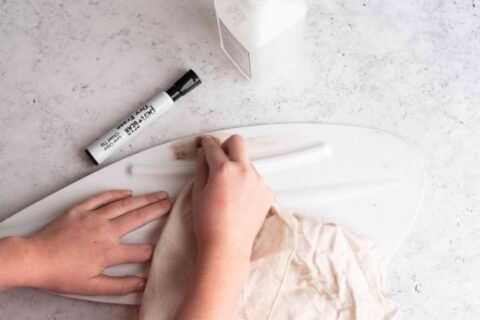
Scribble directly over the permanent marker with a dry erase marker, covering it completely, then wipe immediately with a dry cloth while it is still wet. Dry erase ink contains a solvent that reactivates the permanent ink underneath, and the two lift together. It sounds like a party trick, but on sealed wood it works surprisingly often. It is also the gentlest option available, which is exactly why it goes first.
Method 2: Toothpaste and baking soda
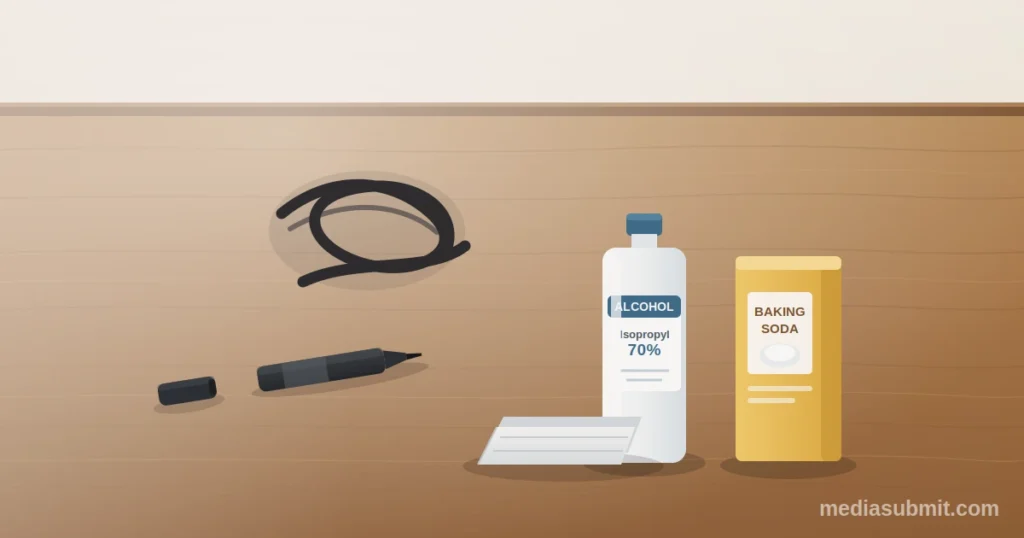
Mix equal parts non-gel white toothpaste and baking soda into a paste. Apply it to the mark with a soft cloth and rub gently along the grain, never across it. Wipe clean with a damp cloth and dry immediately. This is a very mild abrasive, so it lifts ink that is sitting on the surface without cutting into the finish. Avoid gel toothpaste, which has no abrasive in it and simply smears.
Method 3: Rubbing alcohol
Isopropyl alcohol, sold in any drugstore, dissolves the resin that holds marker ink together. Dampen a clean cloth or cotton ball, and blot the stain rather than scrubbing it. Blotting lifts the ink out; scrubbing spreads it sideways into a bigger smudge. Turn to a clean part of the cloth as ink transfers, and keep going until the mark fades. Wipe the area with a barely damp cloth afterward and dry it right away, because alcohol left sitting can haze some finishes.
Blot, do not scrub. This one habit is the difference between a stain that lifts cleanly and a stain that turns into a large grey cloud you cannot get rid of.
Method 4: Hand sanitizer
If you do not have rubbing alcohol, alcohol-based hand sanitizer is essentially the same thing in gel form. The gel is useful because it stays put instead of running across the surface. Dab it on, leave it for around thirty seconds, then blot away.
Method 5: Melamine foam sponge
Sometimes sold as a magic eraser, this is a fine abrasive rather than a chemical cleaner. Dampen it lightly, squeeze out most of the water, and wipe with very light pressure. Used gently on a hard, well-sealed surface it takes marker off quickly. Used with force it will polish the sheen right off your finish and leave a visibly dull patch, so treat it with respect and keep checking your progress.
Method 6: Mineral spirits (last resort on sealed wood)
If everything above has failed and the ink is still there, mineral spirits is the strongest option that is still reasonably safe on a cured, sealed finish. Apply a small amount to a rag, blot the stain, and wipe clean. Work in a ventilated room. If mineral spirits does not shift it, the ink has almost certainly penetrated past the finish, and you are now looking at light sanding and refinishing rather than cleaning. For a broader look at rescuing damaged furniture surfaces, the DIY specialists at Family Handyman cover the refinishing side in detail.
What to Do When the Wood Is Unfinished
Raw wood is a different problem. The ink is inside the grain, not on top of it, so solvents mostly just push it deeper and widen the stain. Skip the alcohol here.
Your realistic options are:
- Light sanding. Start with 220-grit sandpaper and work along the grain. Take off as little material as you can, checking often. This is genuinely the most effective fix for bare wood.
- Hydrogen peroxide. A three percent solution dabbed on and left for a few minutes can lighten the ink, though it may also lighten the wood around it, so expect to sand and refinish afterward anyway.
- Accept and adapt. On chopping boards and craft pieces, sanding is quick and easy. If the piece is large, sometimes the cleanest answer is to sand the whole surface and reseal it so the color stays even.
Whatever you use, finish by resealing the sanded area with an oil, wax, or sealer that matches the rest of the piece. Bare sanded wood absorbs the next spill even faster than the last one.
What Not to Use on Wood
These will take the marker off. They will usually take the finish off too.
- Acetone or nail polish remover. It dissolves polyurethane, lacquer, and shellac almost instantly and leaves a permanently soft, cloudy patch.
- Bleach. It strips the natural color out of the timber and leaves a pale ghost where the mark used to be.
- Steel wool or scouring pads. These scratch the finish and leave a dull, scuffed halo around the stain.
- Soaking the area. Water sitting on wood swells the grain, lifts veneer, and causes white blushing under the finish.
- Heat guns or hair dryers on high. Heat softens finishes and can bubble them.
Keeping It From Happening Again
A few small habits save a lot of scrubbing:
- Keep a cheap plastic placemat or cutting board in the drawer for kids doing crafts at the table.
- Store permanent markers separately from washable ones so nobody grabs the wrong pen.
- Add or refresh a protective coat of wax or polyurethane on high-traffic surfaces. A good finish is what gives you the chance to wipe ink off in the first place.
- Act fast. Fresh marker lifts far more easily than ink that has had a week to cure.
The same principle applies across the house: the easiest mess to clean is the one you catch early. If you like practical fixes that use things already in your kitchen cupboard, our guide on descaling a coffee maker without vinegar works on the same idea, and there is plenty more in the home and garden section.
Frequently Asked Questions
Does rubbing alcohol damage wood?
On a sealed surface, brief contact is usually safe, especially if you blot and dry straight away. Left to sit, it can haze or soften shellac and lacquer finishes. Always spot-test first.
Will Magic Eraser remove permanent marker from wood?
Yes, and quickly, but it is a fine abrasive. Use light pressure on sealed surfaces only, and stop as soon as the ink lifts, or you will dull the sheen.
Can you remove permanent marker from unfinished wood?
Partly. The ink soaks into the grain, so solvents rarely work. Light sanding along the grain is the most reliable fix, followed by resealing the area.
Does toothpaste really remove Sharpie from wood?
Non-gel white toothpaste does, because it contains a mild abrasive. Mixed with baking soda it works even better. Gel toothpaste has no abrasive and just smears the ink around.
Why should I not use acetone on wood?
Acetone dissolves most wood finishes as readily as it dissolves ink. You will remove the marker and the protective coating at the same time, leaving a cloudy, soft patch that needs refinishing.
How long can marker sit before it becomes impossible to remove?
There is no hard deadline on sealed wood, but fresh ink lifts far more easily. After several weeks the solvents in the ink have fully evaporated and the pigment has settled into any micro-scratches in the finish, so expect to work harder.
Final Thoughts
Permanent marker on a favorite table feels like a disaster in the moment, but it is one of the more forgiving household accidents. Identify whether the wood is sealed or raw, spot-test in a hidden corner, then work up from the gentlest method to the strongest and stop the second the ink disappears. That order is the whole secret to how to remove permanent marker from wood without trading an ink stain for a stripped finish. Keep the acetone in the cupboard, blot instead of scrubbing, and most marks will be gone in under ten minutes. For more no-nonsense home fixes, browse the latest guides at Media Submit.