Today, in a digitally driven world, it is possible to ask what business cards still hold significance. Incredibly, these little portable cards made of plastic or paper are still among the most efficient tools available to people in all industries. Business cards aren’t just used for sharing details of contacts; they help forge connections, build professionalism, and communicate your brand’s identity.
Explore the many reasons business cards continue to matter, providing numerous opportunities to build lasting connections and highlight your brand’s uniqueness.
A Brief History of Business Cards
They have a rich story, beginning in 15th century China, in which they were utilized as “visiting cards” to announce an individual’s presence. In the 17th century, they began to receive popularity throughout Europe, particularly among the elite, and they were called “calling cards.” Over the years, as commerce and trade grew, the cards transformed from tools for social interaction to well-qualified icons, which signaled their identity and purpose in commercial situations.
The role of business cards as a symbol of respect, manners, and formality is still the same. The business cards of the past have crossed generations and are a constant symbol of both personal and skillful relationships.
The Tangible Power of Business Cards
Even in a time when the majority of transactions happen electronically, there’s something incredibly powerful about holding a tangible item. Business cards are a perfect example of that and are the tangible memory of an event, event, or significant experience. In contrast to an email or LinkedIn connection, which could be easily erased out of memory, a business card will last forever as a gift. It is a tactile experience that gives the card a more lasting impression on the receiver.
Research has shown that we’re more likely to identify an individual when we have an object that we can associate with the person. Cards for business create that feeling of permanence, establishing your place in digitally mediated interactions.
First Impressions Matter: The Impact of a Great Business Card
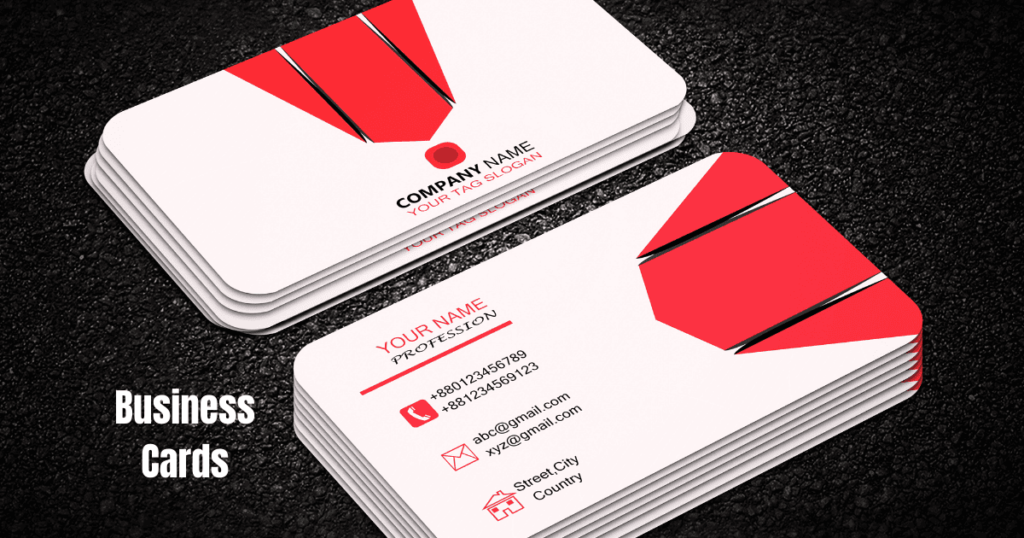
Your business card can make the first physical impression upon those with whom you come into contact. Imagine it as an ambassador. It speaks for you even when you’re away. The style, the colors, the font, and the papers’ quality convey a lot about who you are and the quality of your professionalism. An elegant, skillful design conveys confidence and trustworthiness, while an innovative layout demonstrates your style and accessibility.
A brief conversation with your company card will affirm, “This is who I am, and this is the standard I uphold.” Ultimately, you only have one opportunity to present yourself in a positive light, so why not take advantage of it?
Why Business Cards Are Still Essential in Networking
Networking remains the foundation of skillful development in the modern world, and business cards are essential to efficient networking. When you’re conversing with a person face-to-face, handing out cards to business associates adds an element of personalization that digital exchanges cannot replicate. In contrast to online transactions, which can be a bit like transactions, business cards create an impression of formality and trust.
Giving and receiving business cards creates a sense of mutual respect and acknowledgment and lays the basis for an ongoing, well-qualified connection. Business cards aren’t simply paper scraps. They’re also conversation starters, memory anchors, and the gateway to a new opportunity.
Creating a Memorable Design for Your Business Card
To ensure your business card is distinctive, concentrate on making it memorable. Unique designs can entice interest, leading the reader to consider, “Who is this person?” and “What do they do?” The card you choose to use should include important information such as your name, address, and contact info; you are at ease adding aspects that show your personal style and your brand.
Try diverse layouts, colors, and fonts, incorporating creative elements like foiling, embossing, or QR codes. The right design and layout can create a business card that is one of the most memorable assets.
The Role of Business Cards in Brand Identity
The business cards act as compact images of your business and communicate your company’s identity as well as its mission and values with a simple but effective method. If, for instance, your company’s focus is sustainability, think about recycled papers or environmentally friendly inks. Every time someone sees the card, they are returned to your brand’s core.
A carefully designed and constructed card that’s in sync with your logo colors, scheme of color, and messages reinforces your brand’s branding, creating the perception of trust and recognition. So, business cards become silent ambassadors for your company long after the cards have been traded.
Building Trust with Business Cards
When it comes to business, trust is essential. Cards help to build confidence by showing your dedication and professionalism. If you give someone an excellent business card, it shows you’re taking your job seriously. In different cultures, exchanging business cards shows trust and respect. An attractively designed, well-crafted card demonstrates reliability, which makes it more likely for clients or colleagues to save and refer to the card. When investing in top-quality business cards, you invest based on trusting your connections.
What Business Cards are integrated into a modern Marketing strategy
While they’re not new, business cards can enhance contemporary marketing strategies, bridging offline and digital spaces. With QR codes, social media handles, and website URLs, it is possible to shift seamlessly from traditional interactions into digital interactions. For businesses in specific regions, services like online business printing card in Hyderabad India offer convenient and localized solutions for professionals looking to make a lasting impression.
Essential Information to Include on a Business Card
Simplicity and clarity are the key. Additionally, you might want to include the tagline of your choice or an explanation that identifies what sets you apart from the rest. A designer, for instance, could utilize “Creating Visual Stories,” and a consultant could use “Helping Businesses Grow.” These tiny details can give the card more depth, making it much more than details about your contact info; it’s also an easy overview of your well-qualified brand identity.
Unique Business Card Ideas to Stand Out
Incorporate unique elements into your business card design to leave a memorable impression. You can think about features such as embossing unusual designs or striking hues. Unusual shapes can draw interest, while embossed designs give the card a more elegant feeling. Be aware that the card must be practical and effortlessly fit into business or wallet card holders.
If your card stands out visually but has no practical dimension or quality, it may not last long. Finding the perfect balance of functionality and creativity can warrant your business card to remain valuable and memorable.
Quality Matters: Choosing Materials for Your Business Card
The materials you use to make your business cards reflect the attention to attention to detail and high quality. A high-quality, durable cardstock with a shiny finish or even environmentally friendly materials conveys a signal about your brand’s principles.
If you value the environment, you can choose biodegradable or recycled products. Business cards that feel robust and well-made will give the appearance of trustworthiness and worth and are less likely to be remembered by prospective clients or business partners.

How Business Cards Bridge Digital and Physical Marketing
Cardholders with business cards can efficiently help bridge the gap between physical and online marketing. Adding QR codes to your business card cards becomes an online launchpad for your web presence. One quick scan could bring users to your LinkedIn profile, website, or even a video promoting your business.
The integration helps keep the flow of in-person interactions and makes it easier for prospective clients to keep studying you. Cards for business remain useful by connecting tangible objects to digital. It allows for seamless interactions between the two worlds.
Common Mistakes to Avoid When Designing Business Cards
An amateurish business card design could give customers or clients the wrong impression and may create an unpleasant first impression. Don’t overflow the card with excessive data or unreadable fonts. Simple designs help communicate professionalism. Images of poor quality, exaggerated colors, or intricate designs can cause confusion.
Beware of generic templates; a customized card is more a reflection of your company’s image. Utilizing high-quality paper and staying clear of designs that are not original warrant that your professional card stands out and will be a valuable keepsake.
Business Cards for Different Professions: Tailoring Your Design
Different occupations have different requirements for designing business cards. In particular, traditional fields like finance and law require simple, skillful designs, while innovative fields such as photography or graphic design can explore bold colors and distinctive layouts.
The ability to customize your business card to match your business helps customers and colleagues feel comfortable with you because they can see that it is in line with their expectations. It illustrates that you know the industry you are working in.
Business Cards as a Conversation Starter
Cards for business provide more than favorable contact details. They also can spark conversations. An attractive design, a distinct color selection, or a unique substance often entices people to look further, which leads to questions and a discussion.
Your business card may serve as an icebreaker and can set the tone for more in-depth conversations and connections when you are in a social setting. Your card should reflect what you would like to discuss with prospective clients or potential partners.
Future Trends: The Evolution of Business Cards in a Digital World
Businesses are adapting their business cards to the digital revolution, mixing traditional functions with the latest technological advances. New trends in the future comprise electronic business cards, NFC-embedded cards, and virtual reality functions.
As technology advances, the primary purpose behind business cards remains unchanged: they serve as a means of connectivity. As technology advances, business cards will likely change, but their function as connectors will not change.
Conclusion
Business cards create a lasting impression in the world of flimsy connections to the internet. They help bridge the gap between the physical and digital worlds, reinforce your branding, and establish confidence. If you want to make a statement, business cards offer a tangible reminder that certain things are still important. When designed properly, the business card can be more than just a means of contact—it’s a chance for infinite competent development.
FAQs
What is the reason business cards are still relevant in an age of digital technology?
Business cards add an immediate, long-lasting impression, which digital connections do not which makes them perfect for networking in person.
What should I write on my card for business?
Include important information such as your name, the title of your job or company’s name, and address, along with a brief tagline or QR code to allow simple online accessibility.
How do business cards enhance my brand reputation?
A professionally designed business card showcases the brand’s colours, logo, and values, enhancing its recognition and professionalism.
Which materials work perfectly to use for business cards?
The highest-quality paper, gloss finish, or eco-friendly choices give your card a skillful look, allowing it to make a statement and last longer.
How do business cards bridge physical and online marketing?
Making QR codes or adding social media buttons allows recipients to easily access your profile online by combining offline and online interaction.
Do I have to use a digital business card instead of a physical one?
Digital cards are a good option for connecting via virtual networks. However, physical cards are far superior to face-to-face meetings.
What can I do to create a unique business card for my company?
Use creative elements for design, such as distinctive shapes, embossing, or a custom font; however, make sure it’s functional and easy to transport.
Are business cards effective for all fields?
However, you can tailor your designs to standard industry practices; well-qualified designs suit formal areas, while innovative concepts work well in the arts and crafts industry.
Do business cards help in building trust?
They certainly do since they demonstrate confidence and professionalism, leaving an impact when they engage in skillful interaction.
What are the most common mistakes you should avoid when dealing with business cards?
Beware of cluttered design, difficult-to-read quality paper, poorly-made fonts, or templates with generic designs to preserve professionalism.
Visit More: Empower your business